James Hutton and Glen Tilt
Explore our new exhibition for 2026 that celebrates the tri centenary of the enlightenment polymath Dr James Hutton and his discoveries within Glen Tilt, Atholl Estates.
Exhibition overview
The sculptor Jake Harvey and artist Helen Douglas were commissioned by Blair Charitable Trust to create sculptures and printed works using Glen Tilt, which runs for several miles Northerly from Blair Atholl, and the discoveries of the geologist James Hutton in that glen as their inspiration. Their works alongside various artefacts relating to James Hutton’s visit to the glen in 1785 are on display in the Banvie Hall within Blair Castle. The exhibition runs until 30th October.
The exhibition is part of a nation wide celebration of the tercentenary of James Hutton (1726-1797), the polymath and founder of modern geology. It is in the glen running into Blair Castle that Hutton made one of his great discoveries unlocking the theory of deep time. This is the inspiration behind the artists’ work and we hope their beautiful work brings Hutton’s discovery to life.
Exhibition location: Inside the Banvie Hall at Blair Castle, located towards the northern end of the castle, through the glass entrance doors.
Exhibition admission: Included with a Castle or a Gardens & Grounds ticket.
If you have a Gardens & Grounds ticket, please enter via the Banvie Hall entrance. Castle ticket holders will exit their tour through the Banvie Hall where they can view the exhibition.
Accessibility information: This exhibition is fully accessible to all via the Banvie Hall entrance. Wheelchair accessible toilets are available inside the Banvie Hall.
Dr James Hutton (1726 -1797), Founder of Modern Geology
Dr James Hutton, made one of his most important discoveries during a visit to Glen Tilt just to the North of Blair Castle in 1785. Hutton was a man ahead of his time in the study of the emerging science of geology. His observations of the world around him – particularly the rocks and landscapes of Scotland – gave him an understanding of how our planet functions. He understood that the world was ever-changing, driven by heat from the Earth’s interior and erosion of the land surface. Hutton therefore established that our world was indeed a dynamic place, subject to continual natural change.
One of the high-profile puzzles for those early scientists was how granite formed. Visit the exhibition to discover how Hutton used Glen Tilt to prove that granite was not the oldest rock as most at the time believed, through his idea that the Earth functioned as a heat engine, confirming his Theory of the Earth.
To this day, Glen Tilt remains a place of pilgrimage for geologists from around the world to inspect the place where Hutton made his ground-breaking discoveries.
These new ideas were not accepted during Hutton’s lifetime and he had to endure ridicule for what was regarded as a radical interpretation of the rocks he saw in Glen Tilt and elsewhere in Scotland. But the truth will out and Hutton’s ideas are now regarded as one of the founding pillars of modern geology.
The Artists
Jake Harvey RSA – Carvings
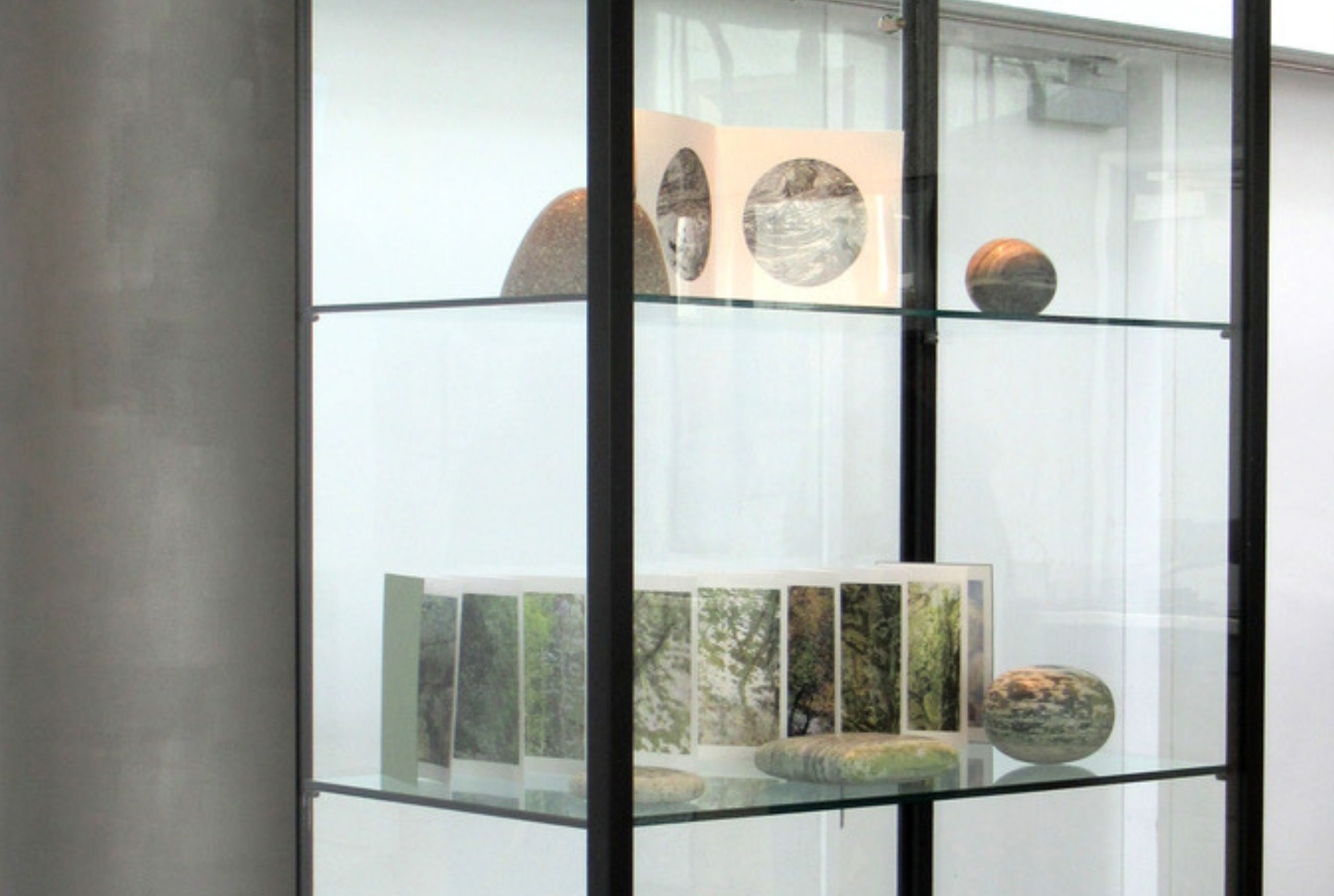
The exhibition displays carved and honed sculptures that are made from rocks gathered in Glen Tilt.
Selected for their inherent sublime beauty and variation of colour, mineral composition, texture, and containing therein the empirical evidence of their creation, they also reveal subsequent geological episodes of intrusion and foliation, and in some, later phases of change through tectonic upheaval, ruptures, faults and metamorphosis.
These carved and honed stone sculptures and spatial configurations evolve from thinking about the formal and three-dimensional integrity that is the language of sculpture. They consider also the individuality of each collected rock as it has been shaped through time; the eroded landscape of the Glen itself and Hutton’s theories of a constant process of circularity and connectivity that occurs within nature and our world.
Helen Douglas – Artist Books
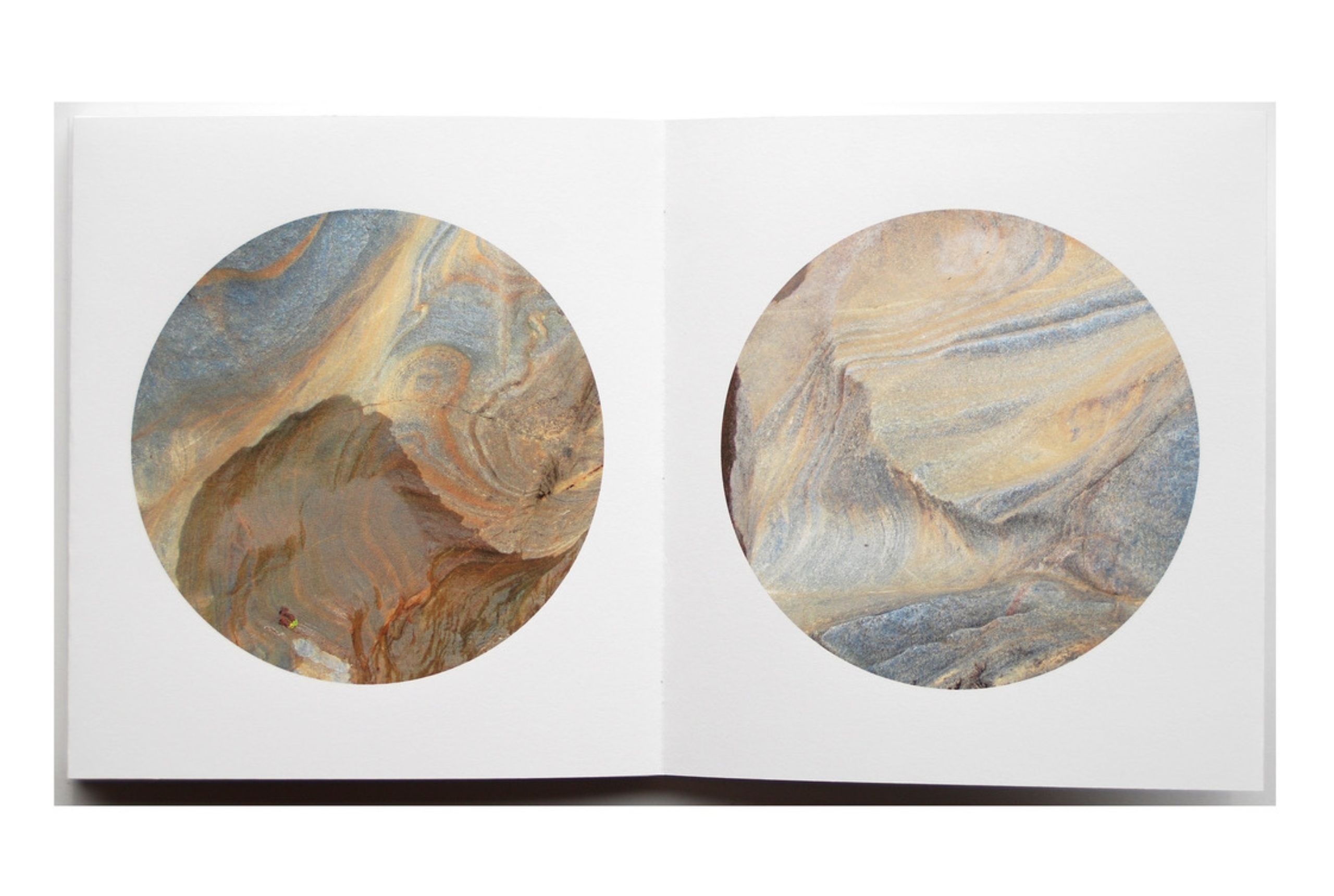
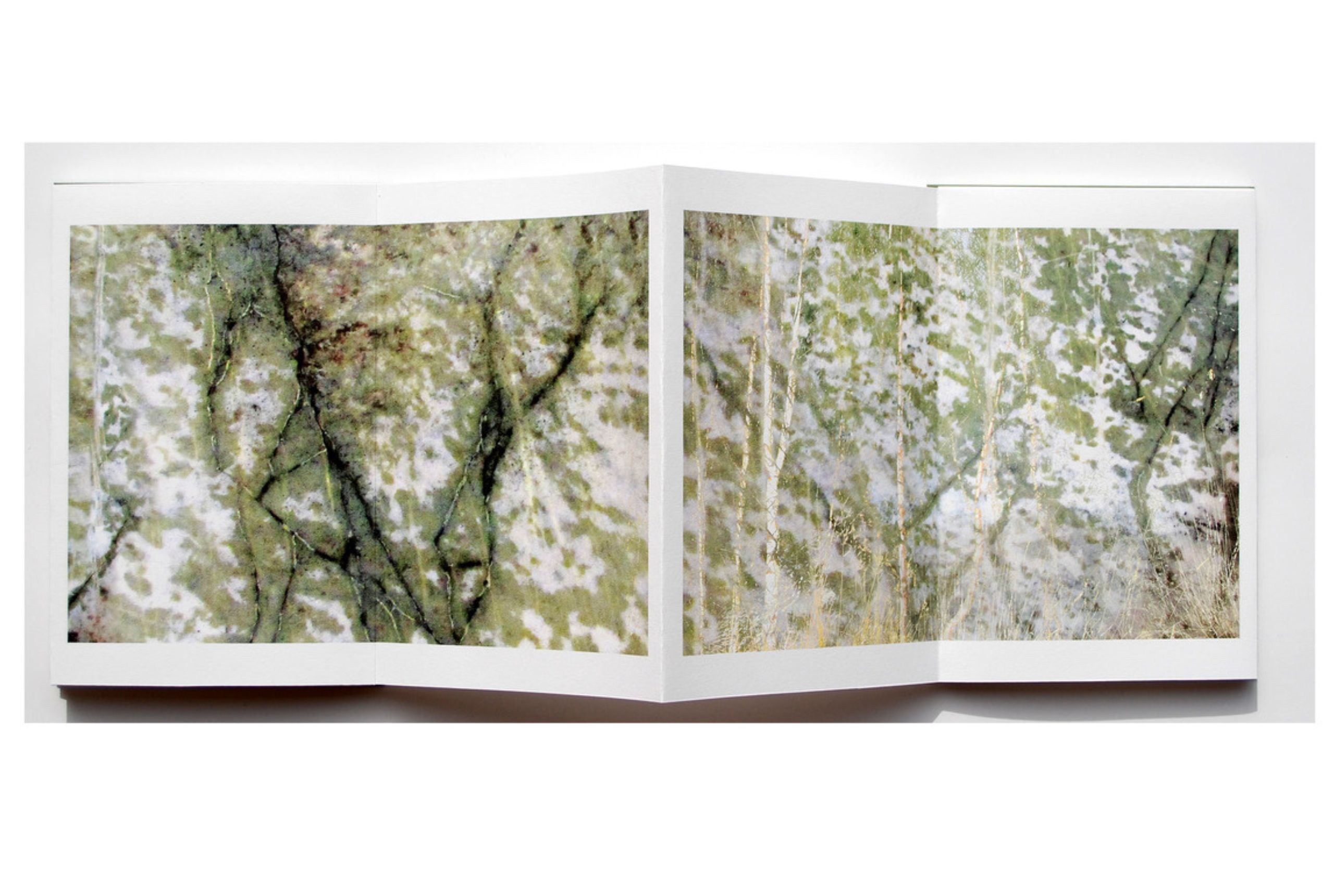
The books that Helen made have been inspired by James Hutton’s Theory of the Earth, the astonishing beauty of Glen Tilt and more generally aesthetics of the late 18th century.
Hutton’s 1785 study of rock in the glen, proving how schist was formed and later shot through by granite, encouraged me to firstly focus in on boulders within the Tilt.
Helen discovered the roundel framed this focus and in so doing brought rock as globes – with movement – to the page. Helen wanted her book On Circularity to convey in page sequence something of the sublime enormity of Hutton’s theory of this dynamic Earth.